Reaching out to provide Equitable Accessible Care for the Homeless.
The Pool has provided care to homeless patients since opening the doors of the free clinic in 2005. As a natural extension of that care, PA Strain partnered with Hope for the Homeless to provide medical assessment on outreach, visiting encampments in wooded areas, under bridges, in vacant houses, abandoned buildings and warehouses. Dr. Schulman joined the team a year ago devoting dozens of hours to the project. Over the last two years, the Pool has provided first aid and evaluation in the field and then enrolled those in need in the clinic for medical care and routine follow-up.
A significant obstacle to consistent care has always been transportation and compliance. To address the problems compounded in the homeless population and care for the increasing number of persons with medical problems identified on outreach or referred by other agencies, the REACH Clinic was opened. The Pool participated in the Stand Down 2008 for the Homeless and was able to enroll several patients referred by the medical stations for the first REACH clinic. Information cards were also provided for social service agencies and law enforcement personnel who have contact with homeless persons daily.
REACH is open Wednesdays from 2:00pm-5:00pm. Patients housed in missions such as Mother Stewart House, Rescue Mission or Salvation Army are given bus passes by those agencies and transportation for chronically homeless clients is provided by Hope of the Homeless. Patients are provided medical care, lab testing as needed and medication samples or gift cards. Anyone needing long term medications is enrolled in patient assistance programs. Outreach coordinator Brian Crowder, a licensed addiction counselor remains on site to provide his services. Layne Richardson, our favorite taxi driver blesses us with additional transportation when needed.
After clinic, the patients join everyone for fellowship at the Wednesday evening meal provided by Chef Pat and the New Room Outreach Ministries of Grace Community Church. The food pantry and clothes closet are also open.
Last week, patients and volunteers decorated the Christmas tree in the clinic and set-up tables in the fellowship hall. We discovered Danny's talent for grilling chicken and expect he will be back weekly. Everyone was taken back to their camps in time to beat the rainstorm.
Showing posts with label free clinic. Show all posts
Showing posts with label free clinic. Show all posts
12.06.2008


11.17.2007
Why We Do What We Do

As Christians, we are in the unique position of having been called by God to serve the poor, to minister to the sick, the lost, and the hurting. In Luke 10:9, we are told, " Heal the sick who are there and tell them, The Kingdom of God is near you."
Not only are we called by God, but we are held accountable for this call. Matthew 25:31-46 describes the consequences of not following his commands as He separates the sheep from the goats. "When those sent to eternal fire will cry….Lord, when did we see You hungry or thirsty or a stranger or needing clothes or sick or in prison and did not help you? And He will reply, Whatever you did not do for the least of these, you did not do for me."
We see a call to medical ministry in the example of Jesus. There are more than seventy five references to healing in the New Testament. Jesus healed the whole person – physically, mentally, spiritually.
A beautiful example of friends helping a friend overcome obstacles to health care can be found in Luke's portrayal of a paralyzed man. One day as Jesus was teaching, scripture says the power of the Lord was present for him to heal the sick. In this instance, health care was available, but inaccessible to the man because of the crowds. His friends carried him on a mat up to the roof. They had to work together to dig and remove the tiles to break through the roof to lower their friend to Jesus. The scripture says that when Jesus saw THEIR faith, the paralytic was ultimately healed.
As Christians, we are called by God to action. To act, we must first perceive a need. Perhaps we should ask not "what would Jesus do" but "what would Jesus see?" When we see the world through Jesus' eyes, we see the lost, the hurting, the suffering. We see the person, not the crowed waiting room. We see the lost sheep, not the dirt-caked homeless man. We see the children who want to kneel at His feet, not the woman with the six crying kids in tow and a switch in her hands. When we see through Jesus' eyes, we feel what He feels, we are broken and moved to compassion and are compelled to act as He would. "When He saw a large crowd, he had compassion on them and healed their sick." Matt 14:14
Often, even when we recognize the great need for health care, we turn a deaf ear to the cries for help. We have become immune to daily newspaper headlines describing the national health care crisis, the uninsured, underinsured, rising health care costs. Emergency rooms are overcrowded, hospitals filled to capacity. Patients are readmitted again and again, developing irreversible complications because they cannot afford medications or treatments.
Statistics add grim proof that there is a great need. Of the more than 47 million uninsured persons in the United States, a surprising majority are employed. In contrast, data from LSUHSC collected over a three year period for the Cedar Grove neighborhood showed over 13,700 visits. 80% of those visits were by patients in the 18-69 year old range. Almost half of the patients had no insurance funding at all. Many were unemployed. Major diseases recognized in that group were diabetes, heart disease, hypertension, asthma and obesity. Each of these diseases carries significant risk for disabling complications and death if inadequately treated. Many of the patients had multiple illnesses.
In spite of the ready availability of government funded health care and social services, many people continue to suffer due to lack of medical care. Some are hindered by extreme poverty, illiteracy, lack of transportation or assistance; others have conditions exacerbated by lack of understanding and improper use of medications and treatments, by failure to recognize warning signs and symptoms or by high-risk behaviors and substance abuse. State and local hospital and clinic services are physically overburdened and financially strained by frequent clinic visits and hospital readmissions directly related to medical non-compliance secondary to lack of medications or lifestyle. Additional local healthcare services are necessary to improve the quality of medical care by providing a mechanism for education and awareness, early recognition by identification of risk factors and screening, providing basic medical care and maximizing utilization of available services and resources.
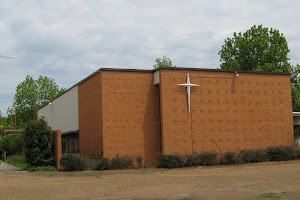
The Pool was founded to share the love of Jesus through a ministry of healing. When God called us to this ministry, he gave us a plan to meet the health needs of the medically underserved through education, preventative medicine, screening, basic medical care, and referral, with emphasis on the utilization of existing social programs and agencies. The ministry is housed at the New Room of Grace Community, a United Methodist Church in the Mooretown neighborhood of Shreveport and is open to referrals from Shreveport-Bossier and surrounding communities.
The road to implementing those plans has been a long and sometimes frustrating process, but throughout we have witnessed the power of God at work. The board of directors was officially founded in April 2003 and our bylaws adopted. Our 501(C)(3) application for designation as a non-profit organization was completed and approved. We have been blessed by many faithful providers who have donated exam tables, equipment, and supplies. God has touched the hearts of many volunteers who have come forward to plan and design the clinic, to teach classes, provide patient care and to write grants.
We have learned to trust God in every aspect of the ministry and have learned that God equips those He calls. In November of 2004, the Pool board of directors met with Dr. Robert Kimmerley of Minden who presented the clinic with a gift of $50,000. The same week, we learned that the Community Foundation had awarded us an operational grant. These funds allowed us to open our free clinic in January 2005 for three patients. We now have over 700 patients in our active database. Since that time we have received gifts and grants from Grace Community Methodist Church, Christian Community Health Fellowship, the PA Foundation, the Chest Foundation, Glide Methodist Church and numerous other donations.
The Pool office hours are Monday through Friday 9:00 am- 1:00 pm. . Available services during these hours are registration, medication assistance, referral, laboratory services, screening and confidential rapid HIV testing. The general medicine clinic is open on Wednesday evenings at 6:00pm and Saturdays at 9:00am. A women's health clinic and diabetic eye clinic are available by appointment. Scheduling of other clinics is available and flexible to accommodate hours of physicians, counselors or other specialists.
As I reflect on the trials, struggles, and blessings of the years since April 2002, I am humbled that God has chosen His children to share in the ministry of healing in the example of His son, Jesus. What an awesome responsibility we have to be faithful stewards of His finances and to care for His sick and hurting.
Subscribe to:
Posts (Atom)
Bednar Clan on a Mission

the Bednar family of Cleburne, Texas spent the day volunteering at the clinic. Amy took over nursing duties and lab draws, former Navy medic Dave helped with vitals and intake and the rest of the clan worked in the food bank and pharmacy.